Monday, March 12, 2012

"Rough Music" by Simon Kurt Unsworth


Rough Music
(Spectral Press Chapbook Series #5)
Simon Kurt Unsworth
28 pages

I've had the good fortune to read and review the first four chapbooks from Spectral Press, so when I received a review copy of their fifth I was really looking forward to seeing what they were offering to readers this time around. As it turns out, Simon Kurt Unsworth brings a literary horror romp that acts almost like a prelude to his impending collection of stories that will be coming out through Spectral Press next year. The guy already has quite a few collections and anthology contributions to his credit, and after reading this story it's pretty clear that I need to find more of Simon's work.

This story, clocking in a little over twenty pages long, involves a married man named Cornish who wakes up in the middle of the night to sound of wood banging on metal somewhere outside his townhouse. He looks out his window to the street below and sees a man wearing a bulbous-shaped mask over his head, dancing a little jig, and banging a wooden spoon on a pot. The guy does this for a while then takes a bow and disappears into the darkness. Imagine seeing that outside your window. Strange shit, right? Well, it escalates.

As the nights press on and the racket outside becomes louder and louder, Cornish learns that his wife doesn't hear a thing, in fact it seems like he's the only guy on the block who can hear the cacophonous concert in the middle of the street. Each night, the strange man in the mask is joined by more and more masked performers until it winds up there is a play of sorts that is playing out each night, and Cornish realizes that it echoes facets of his own life, and the masks resemble those of his neighbors and friends. At the same time, his relationship with his wife is reinvigorated and more passionate after months of a wedge between them, in the wake of a transgression on his part. But the disturbing music and dancing outside his house, despite whatever influence it is having on his mood and relationship with his wife, it depriving him of his sleep--and maybe his sanity.

Yet again, Spectral Press finds a gem of subtlety and escalating strangeness to offer readers. I was really impressed with the way Simon used the mirroring of Cornish's life with the mummer performance outside his window. The ending was a bit abrupt, but it definitely achieved the kind of awkward terror I think he was aiming for. I'll definitely have to keep an eye out for more of his work in the future.

Friday, February 10, 2012

"Black-Eyed Kids" by Ian Rogers


Black-Eyed Kids
by Ian Rogers
Burning Effigy Press (2011)
60 pages
ISBN 9781926611136

Canada isn't all maple syrup and ice hockey, you know. We've got monsters too, and Ian Rogers is a guy who knows how to shine a spotlight on them. I've already been entertained by the first two novellas in his Felix Renn series through Burning Effigy Press, so I was interested to see if Black-Eyed Kids would make it a trifecta.

If you haven't read my reviews of the first two books, which I posted on this blog, you can check those out by clicking on the links: Temporary Monsters and The Ash Angels.

One of the nice things about this series though, is the fact that you don't necessarily need to read the first two to hop on the bandwagon. You could start with the third and get caught up with the main story points in short order.

This time around, Felix is doing some work in Toronto that is much more mundane and far less life-threatening--for a while, anyway. He's been hired by a guy to keep an eye on his wife whom is suspected of being unfaithful, but while Felix has her apartment staked out she is murdered right under his nose--cut in half with the lower half missing, and there's no sign of anyone coming or going. It doesn't take long to realize there is something supernatural going on, as that sort of thing seems to just gravitate to ol' Felix. A big clue that things are on the paranormal side of things is when two kids, a boy and a girl, begin stalking him. Maybe not so disturbing when put like that, but these kids are Village of the Damned caliber creepy thanks to eyes that are orbs of pure black. When Felix finds out the kids are connected to the murder, he also learns the guy who hired him isn't who he says he is, and there's been more than one death linked to those kids.

Whoa Nelly, this one was a dark treat to read. The first two books certainly had their fair share of sinister vibes, but there was more--how do I put it?--rollickingness. No that's not right. Maybe sardonic tone is what I mean. Felix is the kind of guy who will let his world-weary side shine through. This time around there isn't a lot of room for that, because his life is in imminent danger even more than the last two times. The story is the most intense of the three with a threat that Felix comes to believe he can't defeat. Everything plays out really well with an episodic quality I've come to expect and appreciate from Ian's work.

I think this would have to be Ian's strongest effort yet of the three novellas published so far, which bodes well for future iterations, including a Felix Renn novel that's apparently in the works. If you enjoy gritty urban fantasy, this should be right up your alley.

Tuesday, January 17, 2012

"The Ash Angels" by Ian Rogers


The Ash Angels
by Ian Rogers
Burning Effigy Press (Sept 2010)
40 pages
ISBN 9781926611099

I blogged a month or two ago about the first novella in Ian Roger's gritty urban fantasy, the Felix Renn series. I quite like the hard-boiled blending with dark fantasy and a dash of the Great White North for flavor. Well, I got around to reading the second installment, The Ash Angels, and while the book could work as a stand-alone I thought it a good follow-up to the impressive debut.

It's Christmas time, and while Felix and his ex-wife are civil to each other these days, he'd rather be alone--and drunk. He needs something festive for a chaser while home alone, so he heads out to find some eggnog and wides up with a mystery involving piles of ash shaped like angels. It's a case that leads him from a funeral home and ultimately to a familiar location from his recent past, all the while trying to keep from winding up like the ashen corpses he finds.

The Ash Angels has the same hard-boiled approach to urban fantasy that I've come to enjoy from several authors, and Ian has a great character with Felix Renn to explore this world he's created. That said. this second installment didn't come off quite as strong as the debut effort. The curse of the sophomore book in a series, I suppose. It's not bad, quite the contrary actually, but with such a powderkeg as Temporary Monsters, I had my hopes set really high on this one. Still a satisfying read, and I'm eager to read the third installment, Black-Eyed Kids, in the near future, which Ian intimated is his strongest work of the three. Good to know.

If you're not on board the Felix Renn bandwagon, and you're a fan of gritty urban fantasy, I suggest you remedy that.

Wednesday, January 4, 2012

"Four Live Rounds" by Blake Crouch


Four Live Rounds
by Blake Crouch
self-published by Blake Crouch (2010)
ASIN B003BEEAD0

Merry Christmas to me, because quite a few authors I had on my watch list offered free e-books on the Kindle Store this past Christmas. Blake Crouch was chief among them, I dare say, as he had several listed as freebies for a week or two. I think I downloaded them all, including this collection of four short stories. Four Live Rounds was my first time reading Blake's work that was not a collaboration with another author, so I was very interested to see how good he did on his own compared to the thrillrides he writers with J.A. Konrath and others.

"*69" starts with an interesting concept: what if someone's cell phone inadvertently called you while that person was committing a murder? Pretty creepy, especially if you've ever gotten one of those odd calls where there's no one on the other line, but you can hear something like breathing or some kind of commotion. In Blake's story, after the initial phone call, there's a quaintness to the married couple pondering who might have called and whether they actually overheard someone's murder. But the story quickly ramps up as their suspicions escalate and their actions to learn the truth cross a couple of lines. A really strong opener for this collection.

"Remaking" is a tragic bit of work strikes a nerve considering the number of times you hear about a child abduction on the six-o-clock news. If I had to pick a runt from this litter of stories, "Remaking" would be it, but it's still one that kept me hooked until the end because the man's torment and how it threatened the safety of the child was chilling.

"On the Good, Red Road" is a western that acts as a prelude of sorts to a novel of Blake's called Abandon. A man tries to make his way to a mining town, but winds up in the couple of a trio of outlaws. Things are tense enough as the guy tries to gauge how best to get away from the villains, but when a sudden blizzard leaves them stranded and starving in the middle of nowhere, that's when it really turns into a nail-biter.

"Shining Rock" struck me as a story with a really strong start and finish, but there was a piece in the middle that strained my credulity. A married couple are on a romantic excursion in the bucolic fields of a park called Shining Rock, and are approached by a lone man from a neighboring campsite who at first seems off-putting with his large knife, but ultimately charms them with smalltalk and pricey booze. But there's something about the lone man and his brief tale of tragedy during drunken chatter that sets the husband on edge and has him wanting to flee the park as soon as possible. I really liked the story overall, but there was one aspect of the wife's reaction to her husband's revelation that didn't feel believable to me. Aside from that, it was probably my favorite story of the four.

It's a nice, quick hodgepodge for anyone who'd care to check out Blake's work for the first time. A little bit of everything, from western to psychological thriller, to horror. There's a larger collection on the Kindle Store called Fully Loaded, which includes these four stories and a bunch more (his collaboration with J.A. Konrath, Serial, among them), so I'll have to check that out sometime, too.

Tuesday, December 27, 2011

"Temporary Monsters" by Ian Rogers

Temporary Monsters
39 pages
ISBN 9781926611073

I do love me some gritty urban fantasy, so when The Man Eating Bookworm reviewed this novella by up-and-coming Canadian author, Ian Rogers, it caught my eye.

Set in a world in which monsters do exist and the borders between our dimension and a hellish one known as the Black Lands exists as well, Felix is a burned-out private eye with an ex-wife and bills to pay. His latest job has him looking into the background of a movie star who went on a psychotic rampage, in the guise of a vampire, before someone killed him in self-defense--that someone being Felix, no less. Felix soon learns the rising star was not only doing one helluva job as a vampire when he went outhouse crazy in a restaurant, but the movie he was working on in town had him playing a vampire. And when things go wrong with the actor's co-star, who is playing a werewolf ... well, one guess how that turns out.

The world Ian has created here is surprisingly robust when barely using thirty pages to not only set the stage, but tell the whole story. The added twist of a drug that seems to temporarily morph users into monsters of choice is both macabre and original. There's a good payoff at the end with enough of a teaser for future installments. In fact, The Ash Angels is the next story in the Black Lands series, which I hope to read sooner rather than later.

Seeing Canada portrayed as something other than a snowbound land of overly polite syrup-suckers is always welcome, and Ian did a heckuva job layering grime all over Toronto. I'm looking forward to reading what else he has in store for the great white north and abroad.

Friday, December 9, 2011

'Red Penny Papers' (Fall 2011)


I can't remember exactly when it was I discovered Red Penny Papers, but I can tell you it's been a welcome source for short fiction from day one. Stories by Aaron Polson, Camille Alexa, Natalie Sin, and others have provided me with no shortage of creepy, fun stories--and all of them for free.

The Red Penny Papers fall edition presented five short stories from authors who are all brand new to me. "Arkady's Apprentice" by S.J. Hirrons was a rather stirring tale of magic and legacy with a magician, his apprentice, and his son. The side-note at the end of this story, where Hirrons writing instructors apparently dismissed this story as unpublishable. Whoops. That's some writing school.

Next was "So Long, Warren" by Ash Krafton, a devilish mix of noir and the supernatural, which is one of my favorite combinations these days. "Iron Jack" by Mark Rossmore was interesting with its decomposing marriage and the automated servant tearing the couple apart.

"Oni wa Soto" by Sara Kate Ellis would probably be classified as my favorite of the bunch. A story about a devil with a crisis at the workplace. The Japanese setting, along with the undercurrent of dark humor, really resonated with me. Good stuff. And then "Janitors of the Cosmos" by William Vitka finished off the collection. This one could be classified as the strangest of all five stories, bordering on the surreal, as a "god" exterminator roams the universe hunting down various incarnations of deities who still cling to their would-be worshippers.

If you'd like to check these stories out, you find them all on Red Penny Papers' website. I managed to get this in November when Katey the editor pointing me towards an e-book edition--for free! It might still be available, so if you prefer e-books over reading from your web browser, I highly recommend going that route.

Just checked on Smashwords and it's still available free of charge: https://www.smashwords.com/books/view/85230

Wednesday, December 7, 2011

"King Death" by Paul Finch (Spectral Press Chapbook Vol. 4)


It's pretty hard to imagine the rampant disease and death and quite literally plagued Europe, even the world, during the 14th century. Perhaps the centuries have mythologized the Black Death to a point that it's simply hard to comprehend. Hell, judging by the degree to which the public at large loses their damn minds when the evening news mentions a flu outbreak, a bonified pandemic wouldn't have to hit us physically--the world would be crippled on a psychological level. So think back to a time when our modern medical marvels didn't exist, but an engrained acceptance of the supernatural did. What would that world really look like?

Well, Paul Finch shines a spotlight on one patch of England, as a con man roams the country side exploiting death and superstition by parading himself as King Death himself. Rodric is out to plunder a devastated territory for whatever meager gain he can get. After all, who's going to stop them when everyone is too busy dying?

That's kind of a simplistic summary of Rodric and his motives, and when he encounters and orphaned lad with a chip on his shoulder, Rodric's motives are given a real test.

The story itself weighs in around twenty pages, but that's plenty of time to set the stage and the stakes. Some of the language is a bit of a chore to get through for a dullard like me who doesn't read historical fiction that stretches much further beyond the 18th century. Fortunately, there's a glossary at the end of the book, so a quick glance at that and I was off to the races.

This is the first time I've read Paul Finch's work and walked away impressed, showing Spectral Press has a good eye for picking out short fiction to feature in their chapbook series. Paul apparently has a helluva lot more work out there, so I'm going to have to look up some more of his work down the road.

Monday, November 7, 2011

"Last Dance of the Black Widow" by Bradley Convissar


A while back I hada chance to read Brad's novella, Dogs of War, and while I wasn't wowed by it I thought it showed the guy had something going for him, and I wanted to keep his work in mind for later down the road, like the litany of names on my watch list. Then, last week, I stumbled across a free short story by him up on the Kindle Store. I figured I could make some time for a 3,000 word story to check out another piece of his work.

"Last Dance of the Black Widow" is about a widow Abbey Whistler waiting in her hospital room, waiting for her judgment to arrive in the wake of her death. Time is at a standstill, seemingly frozen until its decided whether she's headed upstairs or down. When someone joins her in the room finally, it's her long-dead father and the news isn't good.

The story essentially takes place entirely in the hospital room with the revelations and action occurring through their conversation. Abbey pleads for admittance to Heaven, but as the story progresses it becomes clear that it's unlikely she'll get her wish, and even she understand why deep down.

Some of the dialogue feels a bit stiff, a tad theatrical, but it's a story I found interesting for the fact that I my sympathy for Abbey eroded with each page. And I thought the end worked quite well.

It's worth a look if you want to take a chance on an independent author.

Tuesday, September 20, 2011

The Spectral Press Chapbooks Volumes 1-3

Spectral Press started out this year as a new imprint dedicated to short works of horror fiction, inspired by the classic tales of the late 19th and early 20th centuries, while still looking forward for today's brightest writers with new ideas and new approaches to instilling terror in readers. But, with three issues now out, how close have they come to backing up their claims of providing high quality stories?

What They Hear in the Dark by Gary McMahon

I've got a brand new Gary McMahon novel sitting on my bookshelf waiting to be read, but for some reason I haven't put it at the top of the heap. After reading this story, maybe I ought to reconsider. A married couple buy a big ol' house in the wake of their young son's death. It's a fixer-upper, it'll keep them busy, help them get some closure. But we all know closure is hard to come by, especially when the house you move into has a room that shouldn't exist. The Quiet Room.

I am a sucker for a haunted house story, and this was is one of the best I've read in the last year or more. Rob and Becky, the couple living in the house, offer two stark views of the room and what it means to each of them. Rob hears absolutely nothing, barely his own thoughts, but feels a sinister force somewhere inside the room whenever he is inside it. While Becky has convinced herself the spirit of their dead son is in there. Whether there is something in the room or whether Rob and Becky are projecting pieces of themselves into its void, that's one of the questions that lingers.

The Abolisher of Roses by Gary Fry

I'm unfamiliar with Gary Fry's work, this being my first chance to read his stuff, and it seems I will have to make it a point to find more. His story revolves around Peter, a stodgy businessman, who winds up being dragged by his wife Patricia to an outdoor art exhibit. He'd rather be off cavorting with his mistress, but entertaining his wife's interests from time to time seems to keep the marriage together. But, Peter strays from his wife and the lone path in the gardens out of frustration and discovers artwork that feels too macabre and too personal to belong with the rest of the exhibit.

This was easily the creepiest of the three volumes, as Fry's story gives a bit of the ol' down-the-rabbit-hole vibe, as Peter wanders further into the woods. The guy has such an alienated reaction to the mediocre art he is used to seeing, that when he sees the grotesque and uncomfortably intimate artwork he finds off the beaten path, poor old Peter's sanity has trouble maintaining a foothold. For the mere idea of liberal arts driving a stuffed-shirt conservative to the brink is enough to make me enjoy this one, but Fry goes a wee bit further in scope with this story.

Nowhere Hall by Cate Gardner

The men in pinstripe suits aren't the only strange things populating Cate Gardner's imagination. With Nowhere Hall she offers up a building as unsettling and unraveling as Stephen King's Overlook Hotel--The Vestibule.

Ron is having an off day. So off, in fact, he's contemplating a slow walk through busy traffic. But instead of stepping off the curb, he turns back towards the gleaming white hotel at his back, the Vestibule. Drawn to it, both by a want for shelter and the allure of a beautiful woman who steps inside, Ron goes inside after catching a mysterious umbrella that fell into his waiting hand. Inside, the surreal goes up another notch, with the hotel appearing abandoned and brand new at the same time, mannequins seem to come to life, and the hotel's concierge knows more than he's letting on.

Where Gary Fry's story had a bit of the Alice in Wonderland, Cate's story had it by the bowlful. Nowhere Hall felt like the kind of story Rod Serling would have written if he had a poet's heart--and a hit of LSD. It's a sad song sung slightly off-key, which manages to make it all the more haunting.

Tuesday, September 6, 2011

The Book of Elizabeth

The Book of Eilzabeth by Darby Harn (Fair Play Books, 2011) – The cover blurb of this new fantasy novel from debut novelist Darby Harn reads as follows: "The world as we know it has vanished in the blink of an eye. All of human history, washed away. In its place, a new story of humanity, a story without the complications and twists we all know; a story without the Cold War, or Shakespear. Without Christ." Alice, a contemporary teenager from the mid to late eighties, disappears from her current time, her current world, and wakes up here, in a very alien version of our own world. There are massive airships capable of travelling the world and even through space to other planets. Mars, for example, is colonized. The world-building throughout this novel is a display of unbridled imagination.

In this other world in this novel there is an ongoing war. The dominating power ruling the world is hunting down and killing individuals called “echoes.” These echoes are people transported to this new world from various timelines of our own reality. Alice is an echo. She is hunted by a young girl, Miranda, and her elder mentor, Joshua, in the opening scenes of the novel. As the novel progresses we learn that Joshua has begun to question authority and has lost his desire to perform his job which is killing these echoes. He sees them as people instead of as faceless threats to the status quo. This is lucky for Alice, of course.

But these people are ultimately secondary characters. There is another, far more important, echo that the authorities want destroyed. This echo is known as Elizabeth. In our world, she was Queen of England. In this other world, she is a potential spiritual savior. She transcribes the Bible in her early years in this other world to comfort herself in exile. These transcriptions were found and have started a spiritual revolution in a world that had existed without any form of faith, at least not in the religious sense. Her transcripts sow the seeds of an underground revolution.

This is ultimately what the novel is about, more than the characters, more than the settings. This is a novel exploring the concept of how Christianity might transform a world that has existed without it for most of known history. This idea is explored from several angles, it explores the good and the bad that such a powerful religious force might have within a world that is devoid of spirituality. There are no easy answers in the context of this novel.

Some proponents of the New Atheist movement often put forth the suggestion that religion is the driving force behind all wars. While there are many examples of religious disagreements leading to bloodshed, it seems naive and falsely optimistic to me to think that if we rid the world of religion that all wars and bloodshed would automatically cease. The human drive for power and domination would still exist, after all. I thought this notion was explored nicely within the context of this narrative. It's not the religions that are the problem, it's the people. Religions are just an extension of people and often stray from their most basic source truths, in my opinion, but I'm digressing. Yet this digression is intentional in the context of this review: This is exactly the kind of tough question the novel faces and is brave enough to leave behind with a measure of ambiguity in the answers. This is as it should be.

As one character states: "We can never know the truth. ... Only existence. We must accept our lives as they are, or else we will never know our suffering." So, what is the truth? "We can never know the truth." This seems to be the idea at the center of this novel. The only answer seems to be there may be no answer.

While a thought-provoking and mostly entertaining read, the novel does suffer from a few freshman foibles. The narrative thrust loses steam during transitions from one character to another in places. The epic battle scenes sometimes have a little too much going on and lose their focus. Also, another round of copy-editing may have benefited the story as I picked up numerous issues with verb tense and misused words. But these are minor quibbles, and I see these as common issues with first-time novelists. I know that Darby is working on a sequel. My friendly suggestion would be to focus more on the characters, on dialogue, on relationships, because that is where he shines. I understand Miranda will be the main focus of this sequel. I think this a wise choice. Her moral choices and evolving sense of self were the highlight of The Book of Elizabeth. I look forward to seeing what comes next. This is a world I would be happy to return to.

My six-pack review: 4 out of 6 Elizabethan Ales.

Disclaimer: The author of this review knows and has worked with the author of the novel in the past. Free electronic copy provided by the author for review.

Tuesday, August 16, 2011

"Serial" by Jack Kilborn and Blake Crouch


Serial
by Jack Kilborn (aka J.A. Konrath) and Blake Crouch (aka Blake Crouch)
Norwood Press signed limited edition (2009)
64 pages

I had a free PDF copy of this novella from J.A. Konrath's website, but I never got around to reading it until I won a physical copy from The Man Eating Bookworm. As it stands, I really should have read it as soon as I had that PDF--but I hate reading books in that format.

The story is dead simple: what if two incredibly efficient, undeniably psychopathic serial killers crossed paths, and targeted each other without realizing they were cut from the same cloth?

The answer: mayhem.

Donaldson is a killer whose preferred prey is any hitchhiker on a lonely stretch of highway that catches his eye. He doesn't fuss with knives or guns, though. Nope, he's got a customized kill wagon with reinforced steel behind the plush dashboard that a lot of damage. If you've ever seen Deathproof, and the car Kurt Russell drives, just imagine a family friendly version of that. Then, there's Lucy, who is just the sweetest little thing you ever did see--and she knows it. She winds up being Donaldson next hitchhiker, since she's the kind of killer who gets off on luring men to pick her up from the side of the road, so she can take them somewhere secluded and torture the holy hell out of them.

Donaldson and Lucy were born to meet.

The collaboration worked really well between Konrath and Crouch, with Joe creating Donaldson and Blake creating Lucy, then pitting the two characters against each other. Kind of like a demented literary form of playing Mortal Kombat. It's a tautly woven novella with nothing extra to clutter up the carnage. Definitely a fun, fast read for horror and thriller fans alike.

Since it was originally published, there's been a sequel put out, as well as an "uncut" version of each, even put together in an omnibus e-book on the Kindle Store and other places. If the extended version is as good as this, I'll definitely have to look out for it.

Friday, July 29, 2011

"Die, Lover, Die!" by the authors of the Top Suspense Group


The twelve Top Suspense authors came together to write a novelette. When I first read about this I thought it sounded like one of those "two many cooks spoil the broth" scenarios. I mean, how the heck can twelve people effectively write what amounts to something just outside the classification of a short story?

In actuality, Die, Lover, Die! is a bit of an experiment by the writers to see if they could create a cohesive thriller with each author writing two hundred and fifty words at a time, like a relay with each author passing off the story to the next. The twelve contributing authors were: Max Alan Collins, Bill Crider, Stephen Gallagher, Lee Goldberg, Joel Goldman, Ed Gorman, Libby Fischer Hellmann, Vicki Hendricks, Naomi Hirahara, Paul Levine, Harry Shannon, Dave Zeltserman. As a result, they managed to create an action-packed tale, even though the story's twists feel a bit like speed bumps.

The story begins with a beautiful woman, Lauren Blaine, speeding down a lonesome road with a quiet mystery man riding shotgun--and a carload of gunmen in pursuit. From that point on, it becomes clear the authors play a bit of one-upmanship by swerving both Lauren and the reader with an onslaught of plot twists. If the story itself feels a bit blocky, it is made palatable by an enjoyable femme fatale in Lauren Blaine and the slew of over-the-top characters with whom she crosses paths. It's an exciting story, but the constant gear-shifting gives it a bit of an incongruous feel. And when you reach the end of the story, and you look back at the beginning, you can't help but wonder: how the hell did she wind up there?

Tuesday, July 5, 2011

"The Black God's War" by Moses Siregar: a novella introducing a new epic fantasy


This was a free novella I snagged through the Amazon Kindle Store. It's epic fantasy, which is not a genre I have found much enjoyment in over the years despite my efforts. Siregar's method of promotion intrigued me, though: promote the epic novel, which is due for release in August, by offering fifteen of the early chapters for free that provide their own storyline and give a clear sense of what to expect from the longer work.

While the novel is bound to include a multitude of characters, the novella concentrate's mainly on a brother and sister, Ciao and Lucia. The story begins as Lucia, then a child, witnesses the celebration of her infant brother's birth, hoisted by their father King Vieri before an adulating and exulting crowd. Ciao is heralded as the kingdom's savior-of-sorts, literally the son King Vieri has always wanted. Though, when the story jumps ahead to Ciao's adolescence, he's a healer rather than a warrior cast as the role of the King's lead general in a long-running war against a neighboring kingdom.

For what amounts to a snippet of a larger work, the story presented holds up and has a good pace to it. Siregar's strongest suit may be the character development on display, as the royal siblings and a few other characters exude their personalities and frailties in a believable fashion. Throw in some intriguing magical elements and this is a story I might actually invest a good amount of time in by reading the eight-five chapter novel.

@#$% me, eight-five chapters?

Saturday, July 2, 2011

Osama by Lavie Tidhar


In the interest of full disclosure, I admit Lavie's someone I know and interact with online. I received an electronic review copy straight from the author himself. That said, Tidhar's new novel, Osama (PS Publishing, 2011), is a difficult novel to review without spoilers. I will do my best here. But let me just say upfront that I loved, loved this book! Sometimes when getting a book from a friend or acquaintance, there's a hesitance to review it because of the risk of hurting feelings. There was no need to hesitate reviewing this one.

On a superficial level, at least through roughly two-thirds of the novel, the story is pretty simple to explain. It is about a private investigator named Joe living in an alternative present where 9/11 and The War on Terrorism are the stuff of pulp novels. Osama bin Laden is a popular character in a series of cheap paperback thrillers detailing the lives of terrorists by an author named Mike Longshott. When removed from reality, the exploits of the terrorists make for entertaining reads in this alternative history. There are even conventions dedicated to Longshott and his Osama novels. People dress up like Osama and terrorists at these conventions and have roundtable discussions concerning the social relevance of these novels, much like at a Trekkie convention. The fictional acts of terrorism are all entertainment, nothing to fear.

Joe's story itself reads much like a paperback thriller. He's a hard-drinking, smoking private investigator searching through the seedy underworlds of Europe. Joe is hired to track down Longshott and travels around the world looking to uncover this author. In the process, he starts to learn a thing or two about himself.

The last third of the book is full of revelations. Our reality and Joe's alternate reality collide and the text grows increasingly slipstream and surreal. I won't say anymore about plot because I don't want to spoil the experience for anyone. The less one knows going into this novel, the more they will enjoy it, I believe.

Ultimately, this is a novel about identity, a novel which reflects a reality of the modern age in which we live. We choose our identities in many aspects of modern life – whether it be through a pen name as a writer, the personas we take on in differing social situations, or through online handles and avatars. As one character states in the novel:


"'You have to choose what to be. When you've been stripped of everything; a
name, a face, a love – you could be anything. You could even choose to be
yourself.'"

A wonderfully entertaining and thought-provoking book – My six pack rating: 6 out of 6 Trader Joe's Vienna Style Lager

Friday, June 24, 2011

The Reservoir by John Milliken Thompson


John Milliken Thompson’s debut historical mystery novel, The Reservoir (Other Press, 2011), starts off very promising. We are introduced to a pair of workers at a reservoir who find the body of a young pregnant woman floating lifeless in the water. This is a great set-up for a moody, atmospheric story. We have one character – one of the workers who found the body – fall into infatuation with this young lifeless woman. He takes some items from her that come back as evidence later in the novel. Too bad we never really come back to this character. He was fascinating. This reservoir worker is one of many minor characters in the novel. Unfortunately for the novel, there are many secondary characters within the text that tend to be more interesting than the main protagonist.


Based on the synopsis and cover, I was expecting a tale of lust and mystery. I was expecting a moody historical piece of southern literature, perhaps something along the lines of Faulkner’s Sanctuary. Thompson, a historian, does a great job recreating Richmond, Virginia, circa 1885. He also did a great job researching his story – the book is based on an actual case – and filling in some blanks where the historical documents left off. What I did not expect from this novel was a courtroom drama. I tend to not like courtroom dramas as fiction, to be honest. I read many, many of them as a young man (everything from the Grisham books to To Kill A Mockingbird), became a little burned out on them, and a novel set in a courtroom is going to have to be extremely compelling and have some measure of novelty to keep me involved. In fact, I would rather read true-life transcripts such as those coming out of the current Casey Anthony Trial than another court case in novel form. In fact, the Anthony case, in a way I won’t go into because of possible spoilers, parallels this case nicely. Unfortunately, for me, the court case was the centerpiece of the novel, and I felt it dragged on. I just could not get into that section of the book, and it was a very long section.


Where this novel worked best was in the flashbacks, in the descriptions of minor characters, and in the recreation of a time now long gone. The author deftly handles matters of real-world theology. Once the narration moves past the courtroom drama, the novel became extremely interesting once again. This last act of the novel is a wonderful examination of truth, religion, and resignation. I finally kind of cared about the main protagonist.


The Reservoir is a good, but not great, debut novel. The beginning and ending were well done, the historical details are engrossing, but the middle section of the text was kind of a slog. I see promise for Thompson and would pick up another book by him. There’s ample evidence of a good writer here. I just hope in the future, he dwells on his strengths as a writer (characterization, descriptions) and learns how to make the more interesting characters the primary focus of his stories instead of relegating them to the background. I find myself wondering what this novel might have looked like if written from the perspective of the reservoir worker who was the focus of the first section of the novel, the one who falls in love with the corpse? I believe his would have been an interesting world view to filter this unfolding story through.


My six-pack rating: 3 out of 6 Legend Brown Ales


*Legal Notification: Free electronic copy received from publisher via NetGalley.com.

Thursday, June 23, 2011

Ideomancer, Vol. 10, Issue 2, June 2011

Overall, this issue was a pleasant little mental vacation for me…

Per editor Leah Bobet: “Our June 2011 issue is full of summer travels, both physical and of the mind and soul and heart.”

FICTION: We have one great selkie story; one good – if slightly derivative – shape-shifter piece; and one complex, thought-provoking experiment that is as well-written and intriguing as it is difficult.

“Rendered Down” by Cory Skerry – It appears Ideomancer is fond of selkie stories – I’ve read a quite few of them here if memory serves me right. In this selkie story, the protagonist, Miranda, is overweight and extremely uncomfortable in her own skin. She wants to be with a boy, she wants for boys to want her, and is disappointed when all the boys in her life prefer her coworkers and other girls “shaped like a Barbie” over her.

One day, Miranda finds a handsome selkie boy on a rock near the sea and begins to dream about him and his lifestyle.

Miranda is an instantly likeable and identifiable character. Her perspective – while a little pessimistic throughout much of the narrative – makes this story work. One of the best selkie stories I can remember reading in recent memory. There’s an interesting twist at the end which is a little different take on the whole selkie myth. It makes sense in the context of the story. Yet, to be honest, I kind of mourned the protagonist’s choice. I was sincerely hoping she would learn to love her own skin, and more importantly, her self.

I highly recommend this one.

“A Letter from Northern Nairo” by Alter S. Reiss – One character says to another at one point during this story: “This is a confused plot.” Well, no, not really. This one is a straight-forward werewolf tale, except instead of a werewolf, we are given the tale of weretigers. It is set in an Asian setting that I could not quite buy into. The description of the hunting party brought to mind Victorian-era England and fox hunts. I know similar hunts happened in other cultures as well, but the narrative is simply too similar in form and structure to other European werewolf stories. It is an enjoyable read, but there’s nothing particularly new or notable about this one. I also feel the format of this one is off. The narrative is in the form of a letter and I personally think it would work much better from either a 3rd person omniscient viewpoint or just a straightforward 1st person narration without the letter device. Who writes letters this detailed while adhering to Freytag’s Pyramid? Nor do letters typically have section breaks. These thoughts threw me out of the story. There is simply too much story “telling” for me to buy this story as a letter. Still, despite being a little derivative, it is a fun read.

“Chrestomathy” by Anatoli Belilovsky -- Per Mirriam-Webster, “Chrestomathy” is “a selection of passage used to help learn a language.” This title sums up this sometimes disjointed and meandering structure nicely. Fictional snippets of literature and correspondence and conversations between various famous authors weave a hidden tale of hidden meanings that discusses politics, slavery, and the ability for writers to spark revolutions (as indicated by the imaginary text-within-the-text “The Reluctant Revolutionist” by Vladimir Nabokov). A unique and interesting structure and format for which the author should be commended. You can feel a sincere love and appreciation of the authors mentioned in the text. Unfortunately, this story has very little narrative pull for a casual, lunch-break reader such as myself.

Also, on a personal level, I tend to disagree with some of the narrative’s assumptions. I see literature as more reactive than proactive as a tool for social change – much like a photograph. Sure there are famous, moving photographs out there that have ultimately, often indirectly, led to action (Kevin Carter’s photographs from Sudan come to mind), but those images are only reflections of a present reality. That reality is ultimately what leads to action – not the reflection, not the art. The art only serves to bring awareness, not change, although awareness can sometimes lead to change. But this is something which can be argued both ways and kind of beside the point and getting my review off on a tangent...

In short, a complex tale utilizing a unique narrative technique. Well worth reading and thinking about, just don’t expect any easy, clear-cut answers or a straight-forward story.

POETRY: A mixed bag. Two really great poems alongside two perfectly nice poems that I found somewhat problematic (although I admit the problem could be with me as a reviewer – poetry reviews are no joke because as subjective as fiction can be, poetry is even more subjective).

“Redcap Repast” by WC Roberts – A sonnet that merges the feel of modern urban noir and Alice’s Adventures in Wonderland. I am left feeling these disparate elements never really coalesce into a whole. The purpose and meaning of the poem remains just a touch out of focus. I feel like I missed something important here, contextually, even though I read it several times.

“The Conqueror of Mars, To His Beloved” by Megan Arkenberg – An apologetic and confessional love poem to the Red Planet itself. Nicely done.

“Splendours to Devour” by Mike Allen – Full of powerful imagery, this disturbing narrative poem tells the story of a war between “…twin hunger holocausts/who shredded and swallowed every scrap/of squirming flesh and shrieking soul/between them…” Highly recommended for those with a taste for dark speculative poetry.

“Beansidhe” by Shannon Connor Winward – “Beansidhe” is the Gaelic word for banshee. This is a first-person poem from the perspective of a beansidhe. In this version of a banshee story, the beansidhe is the ghost of a drowned woman. She mourns the loss of her lover and murderer, an unnamed figure referred to as “you.” Who this “you” is remains unclear and perhaps a little beside the point. Whoever “you” is, she loves this person and misses them and forgives them for doing her wrong. That seems to be what matters. She’s happy enough in her cold marshy grave it appears, but would like for people to stop spreading rumors about her. She only has one love in her life, and that love is “you.” In the last two lines, instead of speaking to “you” she talks to a “they.” Does this mean that “you” might be more than one person? That seems to be the implication here, but I’m not positive to be honest. I found myself wishing the author would have stuck with “you” in place of “they” in these last two lines. This would have made for a more coherent and personal piece of poetry, I think. The “they” – in my opinion – depersonalized all that was building up in previous lines. Although, looking at it a different way, I can see how the “they” could add another meaning to the poem; I’m just not sure this other meaning is built up enough in previous lines to justify the twist ending.


Overall, despite some minor subjective matters, this issue is a great read from one of my favorite electronic markets. You can read the full issue here: http://www.ideomancer.com/?p=828.

Saturday, June 18, 2011

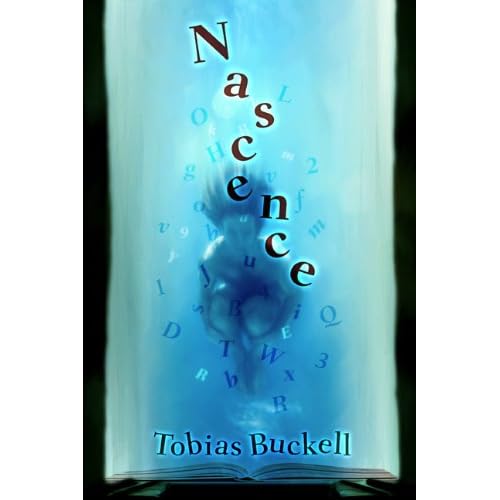
Nascence: 17 Stories That Failed and What They Taught Me

I've been thinking about 'story' all month. What makes a good story? Why do some of my stories sell and others don't? Why can't I judge what's good in my own stories?

Then, as in answer to my wordless pleas, I came across Nascence by Science Fiction/Fantasy author, Tobias Buckell..

What a genius idea. Buckell has published 17 of his trunked stories written over a decade. Each story has an introduction explaining why he belives the story failed.

If you find yourself reading the author's introductions to stories as carefully as the stories themselves; if you're a writer who thinks about that mysterious thing called story, do consider this book. Tobias Buckell is offering something unique: a real insight into the mind of an author. Lessons to be learnt. Nascence has really crystallised some ideas I've been having about 'story' and given me some new insights.

Available on kindle for three dollars. (And if you don't have a kindle, did you know that you can download a free reader for your PC, that's what I did)?

This is the most helpful book I've read on the craft of short story writing for ages. 

Monday, May 16, 2011

A Couple Free Short Stories

Back in March, Iread and reviewed John Brinling's novel, The Watcher. While it didn't resonate with me all that much, there were pieces of it I did like, so John offered me the chance to read and review a short story, "His First Kill," released this year through Smashwords.

It's a thriller, like The Watcher in some regards, though it avoids any supernatural trappings and sticks strictly to the tension of a teenage would-be assassin's first attempted kill.

The boy whose name is not known--"better you don't know"--is a bit frazzled in the brain, from what I took from the story, but I suppose that's to be expected when the kid is looking to take up killing people for a living. He's not a terribly mature killer, enamored momentarily by a brand new bicycle while scouting for his mark.

The real tension of the story comes in the latter half as the boy lurks through the small town during their Fourth of July parade, only to discover the mark is someone he knows, and he has to decide if he's going to go through with it and get his first big score, or if he'll spare the life of someone he cares about.

It's an okay story, bolstered by what I thought was an entertaining second half with a tense will-he-or-won't-he scenario.


I think it was Harry Shannon who announced on his Twitter page that he was offering up this short story, "Jailbreak", for free via Smashwords. Now, if you know me, you know it's pretty damned hard for me to resist free stories.

As it stands, it's a gritty, southern-fried zombie tale about a sheriff, her deputies, and her prisoners holed up in the jail while zombies have risen up all around town and ravaged the place. If you're into zombies at all, then this is some pretty easy stuff to hop into, even if it is--at least to me--fairly familiar territory.

The characters are portrayed through some good dialogue and tense action, but the story itself didn't seem to have anything terribly unique going for it, and it felt like a run-of-the-mill zombie fest with some colorfully drawn characters to prevent it from feeling utterly mundane.

It actually felt like a precursor to a larger story wanting to be told involving Sheriff Penny Miller. If it is, I'd certainly like to read that, because this is a decent teaser.

Friday, April 22, 2011

The Sad Tale of the Brothers Grossbart by Jesse Bullington


The Sad Tale of The Brothers Grossbart - Jesse Bullington (Orbit - 2009)

I must admit that I am a sucker for good-covers, though I am aware of that age-old cliche that judging a book solely on its artistic representation can prove to be a waste of time as well as hard-earned money -- and let's face it, in this day and age hard-earned money is definitely something not to waste. However, when a book does come along with such an alluring design what other indicators does one have that such a book might prove interesting? After all, if the publishing company was willing to spend money on not only the book/author but the cover/artist as well -- especially during these trying times for publishing houses -- then perhaps it is alright to judge a book by its cover?

As such, how could one possibly ignore The Sad Tale of the Brothers Grossbart by Jesse Bullington when their (the reader[s]) eyes fall upon this illustrious cover? What appears to be a skull eventually comes into visual clarity as a pseudo-mish-mashing seek-and-find -- the skull is actually two men standing side by side, with satchels and shovels, whereabouts various artifacts are strewn. So yes, I was drawn towards this novel. I studied its cover for awhile before finally flipping it over to the back whereby I was intrigued by the synopsis and the tag-line: "We ain't thieves and we ain't killers, we's just good men been done wrong" (Bullington).

So, without any further inquiry into the matter I purchased the novel by newcomer Jesse Bullington at full retail price, taking a chance that the story wouldn't disappointment -- seeing as the cover didn't. I must say it was a gamble which paid off, but not handsomely so. While I did enjoy the story overall, and absolutely loved the characters (the brothers as it were), I grew rather bored of the novel about three-fourths of the way through. It wasn't as if I trudged through the book, finding it boring or taxing, but rather I found the scenes and themes inane. It was as if the adventure never stopped, but not in a fantastical way (i.e. epic adventures and long journeys), but rather in an overtly redundant way. It's almost as if the book could have ended several chapters earlier, or lasted several chapters longer.

The story was just the same scenario one after another. The brothers travel, the brothers face a foe, the brothers triumph. But for what? What are its morals or themes? There were religious contemplations, as well as pondering philosophically on justice and righteousness, but did such postulations deserve to last as long as they did; or for that matter end so abruptly? In the end, a better conclusion could have been reached one way or the other. Instead, what we're left with is a story a third of the way into the book which doesn't wrap-up until a few hundred pages later, adding nothing new but more dialogue conversing the same moral questions over and over and over and over and over with an overabundance of expletives. However, I am left to wonder if that's not the sad tale of the Grossbart . . . that life is monotonous, no matter what monsters you may face?

Overall, I liked the book and found it an enjoyable read and would recommend it to any fan of fantasy seeking monsters, gruesome battles, medieval history, religious inquires, and a lot of f___ing expletives.

Suffice it to say . . . Good Book, Good Read.

Thursday, April 21, 2011

The Enterprise of Death by Jesse Bullington

(2011, Orbit Books) Jesse Bullington's The Enterprise of Death is a horrific romp through Medieval Europe during the Inquisition on the verge of the Protestant Reformation. This tale is sometimes dark, sometimes funny, sometimes meaningful, and sometimes all of these things simultaneously. Awa is a young Moor and slave. Her company is captured, and she finds herself under the tutelage of a vicious necromancer. She learns his dark arts and becomes a necromancer, too. Her tutor places a curse on her and wants her for her body in the darkest of ways imaginable. She roams Medieval Europe, finds friends, and seeks out a way to break her curse.

The friends she finds include several historical figures including real-life occultist Peraclesus and the artist Manuel Deutsch (whose art provides quite an evocative cover image). Another friend, Monique, is a foul-mouthed gun-toting blacksmith and pimp who utilizes Awa's skills in communicating with spirits (including the spirits of venereal diseases) to keep the "cleanest" whorehouse in Paris running a profitable business. These friendships form the heart and soul of this novel.

There are massive battles, walking skeletons, monsters, and inquisitors with cellars full of torture devices. The novel is a manic hodge-podge of myth, fantasy, and history blended together into a contemporary pulp narrative. This is both the novel's strength and weakness. The narrative is quickly paced, but sometimes the modern language – especially in dialogue – is a little jarring considering the setting. The language utilized throughout – sometimes sounding medieval while utilizing modern sayings and profanity – can best be described as anachronistic. Also, Bullington tends to have a tendency to change perspectives and settings in his third-person narrative randomly which can be quite jarring at times.

Also, the action taking place in the novel is flat-out disgusting and profane, especially during the initial formative chapters. This may prove problematic for some readers. Fair warning: The novel contains liberal doses of gruesomeness including graphic scenes of necrophilia, cannibalism, and even self-cannibalism. In honesty, at one point during the first part of the novel I seriously considered putting the book down. I wasn't that into it, and it seemed to be disgusting and shocking simply to be disgusting and shocking. During the first half of the narrative, I couldn't quite get my head around the point of the nastiness. It seemed juvenile and, well, gross. And this is coming from someone who spent a large chunk of his formative years reading Clive Barker and devouring Cronenberg films.

But I'm glad I didn't give up. The book was truly worthwhile. The friendships that develop are extremely well-drawn and compassionate. The underlying themes of friendship, faith, and bravery in the face of adversity are nicely explored. The characters – especially that of the protagonist – are quite flawed but manage to be extremely understandable and relatable. In fact, this reader found himself extremely sympathetic towards the characters of Awa and Manuel in particular. The Bastards of the Schwarzwald and the hyena near the end are welcome additions and an interesting take on their folkloric roots. In fact, the final half of the book and the ending are actually quite wonderful. Despite the darkness of the earlier chapters, the book left this reader with a nice warm fuzzy feeling which was, well, unexpected, and quite nice. (But the story remains more than a little twisted – it's not all sunshine and roses in the end. A crazy Bollywood ending complete with big smiles, singing, and happy dancing would have been quite the disappointment, after all.)

Yes, I liked this book very much despite my repulsion during much of the first half. I guess you could say that The Enterprise of Death is a grower not a shower. In fact, I recommend it heartily if you have a strong stomach with a strong tolerance for the profane. My six pack rating: 4 out of 6 mugs of a stout mead accompanied by a nice shredded long pork barbecue sammich.

*Legal Disclosure: Book received as free electronic copy via author and NetGalley.com.